Business News | Addis Ababa | 3 November 2026
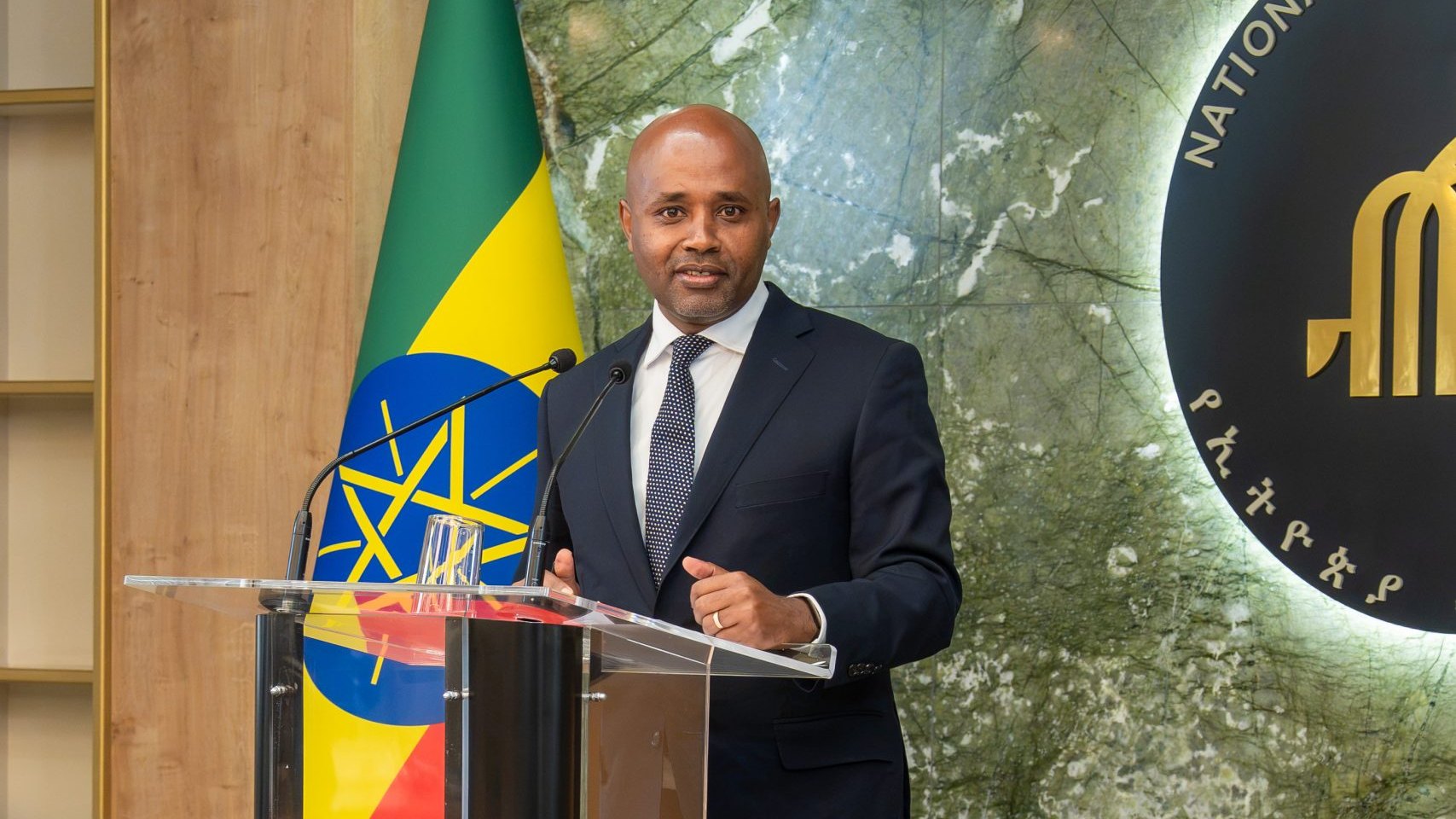
The National Bank of Ethiopia (NBE) kept its policy rate, the National Bank Rate, unchanged at 16 percent on 3 November and left its interest rate corridor of plus or minus 300 basis points in place, according to a press release from the central bank’s Monetary Policy Committee. Governor Eyob Tekalign presented the decision to journalists at the bank’s headquarters in Addis Ababa. The bank says a tight stance is needed to bring inflation down to single digits, but its own figures show money growing far faster than the economy, and independent observers have questioned whether holding the rate is enough.
What the central bank decided
The committee recommended, and the NBE board approved, three measures, the release says. The policy rate stays at 16 percent. The bank will keep assessing individual banks’ loan to deposit ratios and will continue to apply a targeted additional reserve requirement if credit expansion threatens its inflation path. And it will use its indirect instruments, in particular open market operations, to absorb excess liquidity. The committee said monetary and financial conditions “signal moderate looseness” and that a double digit short term inflation forecast calls for a tight stance. It plans to meet again at the end of January 2027, or earlier if conditions warrant.
The bank’s account of the economy
The NBE said inflation has begun to ease from a supply driven peak but, at 14.9 percent in September, remains far above its single digit goal. By the bank’s figures, food inflation eased to 14.8 percent from 15.1 percent in June, while non food inflation rose to 15.1 percent from 12.2 percent, pushed up by electricity tariffs, kerosene and firewood. The committee blamed mainly supply side factors following the Middle East conflict, and projected that headline inflation will decline over the next six months but stay in double digits.
The bank also claimed that the economy has “continued to register strong growth”, citing its own composite indicators of economic activity, and said the banking sector “remained safe and sound, with low NPLs and adequate capital” in the first quarter of the 2026/27 fiscal year. It said the government has not taken direct advances from the central bank for more than 27 months, which it described as the longest such period on record. These are the central bank’s own assessments; the release does not publish the underlying growth indicators.
Money is growing fast, driven by gold
The release itself shows rapid monetary growth. Reserve money grew 87.2 percent year on year in the first quarter of 2026/27, up from 72.6 percent a year earlier, and broad money grew 40.2 percent, up from 33.2 percent, which the committee acknowledged is above the projected growth of nominal GDP. The NBE attributed the surge mainly to its gold operations: the bank buys gold in birr, which raises its foreign assets and puts local currency into the banking system. Net deposits at commercial banks rose 85.4 percent and outstanding credit grew 42.6 percent compared with the same quarter last year, according to the release.
Treasury bill yields and interbank money market rates have kept falling and have been negative in real terms since May 2026, the committee said, while banks’ lending and deposit rates did not change from the previous quarter. It attributed the falling short term rates to the large excess reserves that banks hold with the NBE.
Questions about holding the rate
Asked by Ethiopian Business Review (EBR) why the rate was not raised given the pace of money growth, Eyob said the high figures do not mean the money has reached the wider economy, because liquidity is concentrated in certain banks and the gold related money has not generally been injected into the broader economy. “Under the current circumstances, inflation is not linked to money expansion,” he said, according to EBR. He said the bank would recover liquidity through foreign currency sales and open market operations and could adjust and differentiate reserve requirements across banks.
EBR reported that the governor’s account “sits uneasily with some independent views”, noting that economists it has interviewed argue that broad money is the main driver of Ethiopia’s inflation. The International Monetary Fund raised similar concerns in its fifth review of Ethiopia’s Extended Credit Facility programme, published in July 2026. The Fund said the NBE’s gold purchases were injecting substantial liquidity, much of it through the Commercial Bank of Ethiopia, which has a strong presence in gold producing regions, and that absorbing it through open market operations had become costly. The IMF staff report said a tight stance remained appropriate but that the authorities should resume more active use of open market operations and raise the policy rate if second round inflationary pressures appear likely to emerge. The Fund also called for a strategy to exit the gold market by December 2026, StockMarket.et reported.
The IMF is also less optimistic about inflation than the government’s target implies. Its October 2026 World Economic Outlook projects Ethiopian inflation at 12.3 percent in 2027, up from the 10.7 percent it forecast in April, ETBusinessView reported. Data from the Ethiopian Statistical Service show annual inflation easing to 14.9 percent in September from 15.1 percent in August and 15.3 percent in July, but still higher than the 13.2 percent recorded in September 2025, according to ETBusinessView.
The exchange rate gap
On foreign exchange, Eyob acknowledged that the gap between the official and parallel market rates “has not narrowed down as much as we wanted it to”, EBR reported, despite July measures that, according to EBR, cut the foreign exchange commission rate from 2.5 percent to 1.5 percent and the export surrender requirement from 50 percent to 30 percent. He said the bank would pursue further reforms and work with commercial banks to improve foreign currency supply, and would begin closely examining banks’ capital adequacy and compliance with foreign exchange rules.
Why it matters
For businesses, the decision means bank lending and deposit rates are unlikely to move soon, since the policy rate and corridor are unchanged and banks’ rates did not change last quarter, according to the NBE. Firms facing double digit price increases should not expect inflation to fall below 10 percent over the next six months, even on the central bank’s own forecast. For diaspora senders and exporters, the governor’s admission that the official and parallel rates remain apart is a reminder to compare rates carefully. Whether open market operations can absorb the gold driven liquidity without a rate rise is the question the committee will face again in January.
Related on Ethiopialist
- National Bank of Ethiopia listing
- Commercial Bank of Ethiopia listing
- Top 10 Ethiopian Banks by Total Assets (2024/25)
- Ethiopian Banks Compared: Profiles of the Major Banks
- How to Send Money to Ethiopia: Fees and Options Compared
- Dashen Bank More Than Doubles Pre-Tax Profit to Birr 15.2 Billion and Signs EIB Global Deal (Business News, 31 October 2026)
- Ethiopia Joins the PAPSS Pan-African Payment System (Business News, 25 October 2026)
Sources
- National Bank of Ethiopia, “Monetary Policy Committee Meeting No. 8” (press release), 3 November 2026: nbe.gov.et
- Ethiopian Business Review, “NBE Holds Policy Rate at 16% as Broad Money Growth Climbs to 40.2%, Governor Says Inflation Is Supply-Driven”, 3 November 2026: ethiopianbusinessreview.net
- Ethiopian News Agency (state owned), “Tight Monetary Policy Indispensable to Achieve Single-Digit Inflation, Says NBE Governor”, 3 November 2026: ena.et
- Fana Media Corporation (state owned), “Central Bank Governor Says Ethiopia’s Banking Sector Remains Safe and Sound as Economy Projects Strong Growth in 2026/27”, 3 November 2026: fanamc.com
- International Monetary Fund, Country Report No. 26/174, “The Federal Democratic Republic of Ethiopia: Fifth Review Under the Extended Credit Facility Arrangement”, July 2026: imf.org
- StockMarket.et, “IMF Urges NBE to Prepare Exit from Gold Market as Liquidity Pressures Build”, 15 July 2026: stockmarket.et
- ETBusinessView, “IMF Forecasts Inflation to Rise Against Earlier Expectations and Government Plan”, 15 October 2026: etbusinessview.com
- Trading Economics via TradingView, “Bank of Ethiopia Leaves Policy Rate at 16%”, 3 November 2026: tradingview.com
Last updated: 3 November 2026.
Send corrections to the Ethiopialist editors.
Featured image: National Bank of Ethiopia Governor Eyob Tekalign at a press briefing at the bank, as pictured on the NBE website. Photo: National Bank of Ethiopia (official image), cropped.